 <\/div><\/div>
Strait of Hormuz Faces New Instability: Trade, Insurance & Global Security Challenge<\/h1>
Keywords:<\/strong> Strait of Hormuz, Chubb, Evan Greenberg, US-Iran, maritime security, war risk insurance, oil market, shipping, geopolitical risk<\/p>
For a long time, the Strait of Hormuz has been regarded as one of the world's most critical economic "choke points." It is merely a narrow waterway connecting the Persian Gulf to the Arabian Sea, but any change in the region can immediately affect oil prices, transport costs, insurance premiums, and global financial market sentiment. As the US and Iran continue dialogue over regional security and freedom of navigation, the latest statement from Chubb leader Evan Greenberg indicates that the business community still expects a gradual increase in ship traffic through the strait, but key risks have not diminished.<\/p>
In fact, concerns go beyond potential disruption of shipping through the Strait of Hormuz; they also include the intertwined nature of diplomatic negotiations, military warnings, and financial instruments like war risk insurance. When a strategic transport route lies in a gray zone between conflict and negotiation, every corporate decision must be carefully weighed under a state of "hourly risk management."<\/p>
According to international and domestic media, on the 21st, US and Iranian representatives met in Switzerland to discuss regional security and freedom of maritime passage. However, this already fragile process was soon overshadowed by confrontational remarks from US President Donald Trump.<\/p>
Trump warned on social media that Iran must immediately cease its "proxy arming" activities in Lebanon, otherwise the US would launch attacks "as intense as last week, or even more powerful." He also stated that if Washington and Tehran cannot reach an agreement, the US would become the "protector" of the Strait of Hormuz and collect 20% of Middle East oil revenues. Other reports indicate he has spoken with Iranian officials and warned against blockading the strait.<\/p>
Tehran's response shows the sensitivity of the situation. The Iranian delegation objected to this threat and left the meeting after about 80 minutes for internal consultations. Iranian Parliament Speaker Mohammed Bagher Ghalibaf also issued a warning, saying the other side "should be cautious," while confirming that Iran's armed forces are ready to respond in multiple ways.<\/p>
More notably, a source close to the Iranian negotiating delegation stated that if Israel continues military operations in Lebanon and Lebanon's territorial integrity cannot be guaranteed, the Strait of Hormuz will not reopen. This indicates that the Strait of Hormuz has become not just a transportation issue, but a lever in a larger geopolitical chessboard, where hot spots in the Levant, Persian Gulf, and Red Sea may interconnect, forming a cross-regional risk chain.<\/p>
Few sea routes in the world have as much influence as the Strait of Hormuz. It is the gateway for vast amounts of crude oil and LNG from the Middle East to world markets. Any disruption, even temporary, can trigger a chain reaction: rising energy prices, higher transport costs, increased maritime insurance costs, and narrower profit margins for supply chain companies.<\/p>
The uniqueness of the Strait of Hormuz lies in its natural topography, which already limits shipping capacity, and the volatile security situation makes it prone to becoming a bottleneck. Evan Greenberg emphasized that the situation "changes daily, even hourly," and "the biggest uncertainty is mines." This statement clearly reflects the nature of current risks: not just from the possibility of direct attack, but also from unexpected underwater obstacles that could force cargo ships, tankers, and insurance companies to fully adjust operations.<\/p>
He said the region is currently akin to a "war zone," with only one sufficiently safe narrow channel for transit, limiting the number of vessels entering and exiting. Naval forces from various countries are working to expand safe passages; once the channel widens, shipping traffic will increase. However, during this transition, trade volume remains suppressed by market psychology and actual security conditions.<\/p>
Despite heightened political tensions, maritime trade has not completely halted. US military officials said that on Saturday alone, dozens of merchant ships and millions of barrels of oil passed through the Strait of Hormuz. This shows that shipping routes are still operational, but under "risk tolerance" rather than normal conditions.<\/p>
Therefore, the market is focused not only on whether ships can pass, but also on "at what cost." When companies must consider delays, rerouting, or even temporary suspension of voyages, insurance premiums, charter rates, risk compensation costs, and disruption reserves tend to rise sharply. For energy companies, a few days of delay can significantly impact delivery schedules and financial contracts; for transport and industrial firms, such volatility further erodes already thin profit margins.<\/p>
From a macro perspective, the Strait of Hormuz remains a sensitive point for global inflation expectations. When oil prices rise due to geopolitical risk, cost pressures quickly transmit to energy, logistics, chemicals, production, and consumption sectors. Thus, even if not every crisis leads to a complete blockade of the strait, persistent uncertainty alone is enough to make markets reassess economic growth prospects.<\/p>
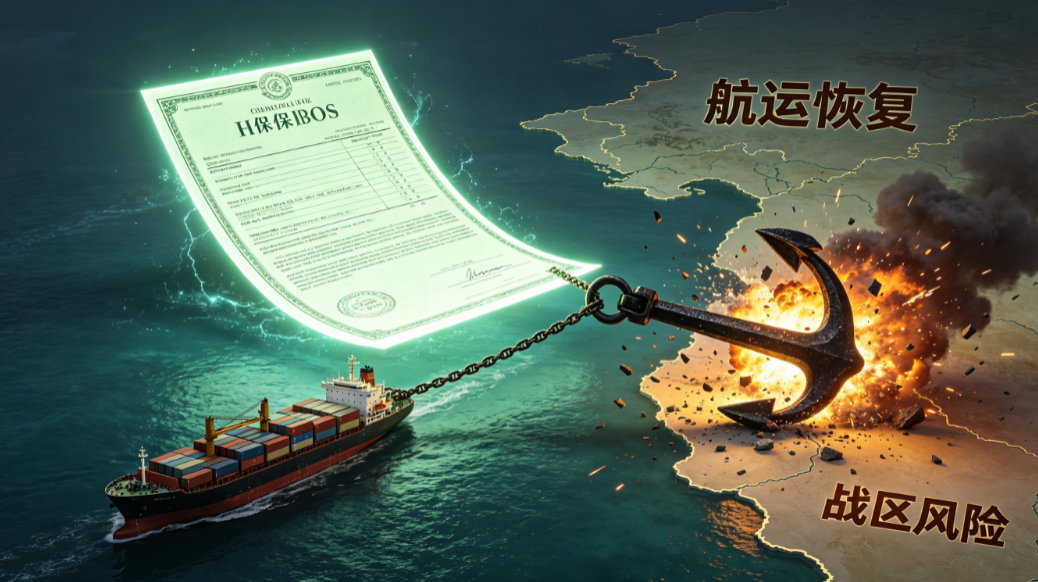
Amid volatile maritime security, the role of insurance groups is becoming increasingly prominent. London Lloyd's and Chubb recently launched a $400 million maritime war risk insurance scheme to cover voyages through the Strait of Hormuz. Chubb also participates in a US-backed reinsurance program aimed at providing additional buffers for transport and trade in the region.<\/p>
This shows financial markets adapting to new realities: intermediaries no longer wait for risks to fade but try to price, diversify, and absorb risks to maintain trade flows. However, insurance is only a tool to mitigate losses, not a substitute for substantive security guarantees. If the situation escalates further, insurance premiums may rise to the point where some shipowners consider rerouting or temporarily suspending operations. At that stage, not only transport operators or insurers would suffer, but the entire global supply chain would be affected.<\/p>
In other words, war risk insurance is becoming a "safety valve" for world trade, but a limited one. It can help the system keep running but cannot fully defuse the impact of political and military decisions.<\/p>
The evolving situation at the Strait of Hormuz reveals a familiar yet persistent truth: when geopolitics touches strategic sea routes, the global economy immediately feels the pressure. Signals from Chubb suggest that if safe passage widens, the business community still believes ship traffic will gradually increase. However, hardline statements from the US and Iran, along with the risk of mines or accidental military actions, keep this outlook fragile.<\/p>
In the short term, the Strait of Hormuz is likely to remain operational, but under intense monitoring, high defense costs, and cautious market sentiment. In the long term, the key is not just to protect a single sea route, but to prevent regional conflict from turning it into a "hostage" of strategic competition. Because if the Strait of Hormuz is truly blocked, the cost would not just be a few delayed ships, but a broad shock to the entire global economy.<\/p>Introduction<\/h2>
Tense Negotiations, Strong Signals<\/h2>
Strait of Hormuz: Small Waterway, Massive Global Influence<\/h2>
Market Still Operating, but Cost of Uncertainty Rising<\/h2>
Maritime Insurance: Financial Defense in a Risk Zone<\/h2>
Conclusion<\/h2>